
Logo psychology10.click

Logo psychology10.click

Independent global news for people who want context, not noise.

Depression

Brain stuck on negative thoughts
Why Negative Thoughts Stick Longer?
Sep 19, 2024
|
36 MIN
|
ANXIETY
Ever wondered why one critical comment outweighs dozens of compliments? It's your brain's negativity bias — an ancient survival mechanism that makes negative experiences stick like Velcro while positive ones slide off like Teflon. This in-depth guide explores the neuroscience behind this bias, how cognitive distortions like catastrophizing and black-and-white thinking amplify negativity, why rumination traps you in loops of painful thoughts, and how negative thinking damages relationships. Most importantly, discover evidence-based strategies to break free: mindfulness, CBT techniques, gratitude practice, self-compassion, and how neuroplasticity lets you literally rewire your brain for greater balance and resilience.

Read more

Top Stories

Understanding Depression Guide Beyond Sadness
Understanding Depression Guide
Dec 24, 2025
|
40 MIN
|
MOOD
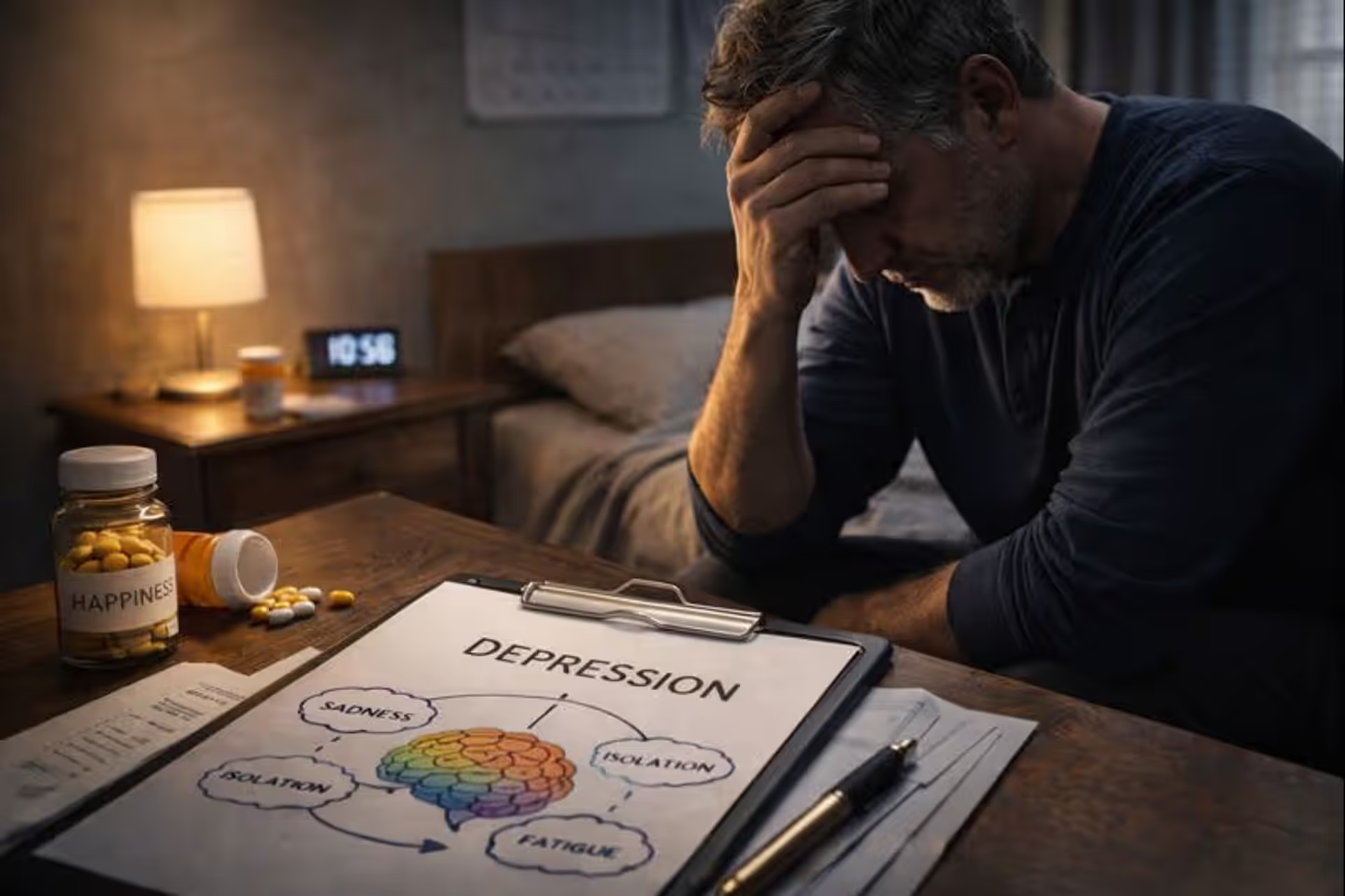
«Just cheer up» — words that reveal a dangerous misunderstanding. Depression is not sadness in a different coat. It's a medical condition that rewires the brain, distorts perception, and strips away the ability to feel pleasure, think clearly, or simply function. This comprehensive guide covers what most people miss: the full spectrum of symptoms beyond crying — cognitive fog, unexplained pain, emotional numbness, and behavioral withdrawal. Explore the biological, psychological, and social causes through the biopsychosocial model, understand why stigma still delays treatment, and discover evidence-based therapies including CBT, interpersonal therapy, behavioral activation, and medication options. Whether you're struggling personally or supporting someone you love, this is your roadmap from understanding to healing.

Read more

Person experiencing a panic attack
Panic Attack Triggers Guide
May 08, 2024
|
41 MIN
|
ANXIETY
Panic attacks don't strike at random — they follow patterns rooted in psychological stress, environmental factors, medical conditions, and personal sensitivities. This in-depth guide explains how to identify your unique triggers through self-monitoring and diary tracking, recognize hidden patterns like caffeine intake, sleep deprivation, and hormonal cycles, and build effective management strategies. From gradual exposure therapy and cognitive restructuring to lifestyle adjustments, grounding techniques, and support systems — discover how understanding your triggers transforms panic from unpredictable terror into a condition you can anticipate, manage, and ultimately overcome.

Read more

Trending

Depression in Disguise
High-Functioning Depression Guide
Sep 16, 2024
|
30 MIN
|
MOOD
They hit every deadline, maintain an active social life, and seem to have it all together — yet inside, they're exhausted, empty, and barely holding on. High-functioning depression affects millions who never match the stereotype of a «depressed person.» This in-depth guide explains what high-functioning depression actually is, how it differs from classic depression, and why perfectionists and overachievers are especially vulnerable. Discover the hidden warning signs — persistent fatigue, emotional numbness, chronic self-doubt, and private withdrawal — the serious consequences of leaving it untreated, and practical steps for seeking help, whether you recognize yourself in this description or want to support someone you love.

Read more

Understanding Depression Guide Beyond Sadness
Understanding Depression Guide
Dec 24, 2025
|
40 MIN
|
MOOD
«Just cheer up» — words that reveal a dangerous misunderstanding. Depression is not sadness in a different coat. It's a medical condition that rewires the brain, distorts perception, and strips away the ability to feel pleasure, think clearly, or simply function. This comprehensive guide covers what most people miss: the full spectrum of symptoms beyond crying — cognitive fog, unexplained pain, emotional numbness, and behavioral withdrawal. Explore the biological, psychological, and social causes through the biopsychosocial model, understand why stigma still delays treatment, and discover evidence-based therapies including CBT, interpersonal therapy, behavioral activation, and medication options. Whether you're struggling personally or supporting someone you love, this is your roadmap from understanding to healing.

Read more

Latest news

Why High Achievers Crumble Under Pressure
Why High Achievers Crumble Under Pressure?
Oct 10, 2024
|
32 MIN
|
IDENTITY
Society celebrates relentless excellence — but behind the accolades, high achievers are quietly breaking. The very traits that drive success (perfectionism, validation-seeking, unwavering standards) become psychological traps when left unchecked. This deep exploration reveals why top performers are especially vulnerable: the need for validation rooted in conditional love, perfectionism that transforms mistakes into identity threats, imposter syndrome that haunts even the most accomplished, and the halo effect that demands flawlessness in every life domain. Examine the neurobiology of chronic stress (cortisol-damaged hippocampus, dopamine-driven achievement addiction), understand how family dynamics, romantic relationships, and workplace culture amplify pressure, and discover evidence-based strategies — redefining success, self-compassion, boundary-setting, embracing vulnerability — for building a legacy of sustainable excellence rather than spectacular collapse.

Read more

The Science of Feeling Numb: What Happens When Emotions Shut Down
Emotional Numbness Guide
Sep 27, 2024
|
34 MIN
|
MOOD
When emotions fade to gray — no joy, no sadness, just emptiness — it's not a character flaw. It's your brain's circuit breaker protecting you from emotional overload. This comprehensive guide explores the science behind emotional numbness: how the prefrontal cortex, amygdala, and stress hormones create shutdown, why trauma triggers the freeze response and dissociation, and how depression's anhedonia steals the capacity for pleasure. Discover how numbness affects relationships and physical health, learn to recognize the signs in yourself or loved ones, and explore evidence-based paths back to feeling — from trauma-focused therapy and somatic approaches to mindfulness, self-compassion, and body-based practices that gradually dissolve the protective barrier between you and your emotional life.

Read more

Most read

What Is Depressive Realism Explained
What Is Depressive Realism?
Oct 16, 2024
|
33 MIN
|
MOOD
What if depression doesn't distort reality — but reveals it? Depressive realism, first proposed by Alloy and Abramson, suggests that mildly depressed people may actually judge their control over events, predict outcomes, and assess themselves more accurately than optimistic non-depressed individuals. This in-depth exploration examines the landmark studies behind the theory, the cognitive biases (optimism bias, illusion of control, self-serving bias) that shield healthy minds from harsh truths, and the strong criticisms — including cognitive distortions that make severe depression clearly unrealistic. Discover how this paradox applies to relationships, decision-making, and personal growth, and learn to cultivate pragmatic optimism: the balanced middle ground between rose-tinted illusions and paralyzing pessimism.

Read more

Person experiencing a panic attack
Panic Attack Triggers Guide
May 08, 2024
|
41 MIN
|
ANXIETY
Panic attacks don't strike at random — they follow patterns rooted in psychological stress, environmental factors, medical conditions, and personal sensitivities. This in-depth guide explains how to identify your unique triggers through self-monitoring and diary tracking, recognize hidden patterns like caffeine intake, sleep deprivation, and hormonal cycles, and build effective management strategies. From gradual exposure therapy and cognitive restructuring to lifestyle adjustments, grounding techniques, and support systems — discover how understanding your triggers transforms panic from unpredictable terror into a condition you can anticipate, manage, and ultimately overcome.

Read more

disclaimer

The content on psychology10.click is provided for general informational and inspirational purposes only. It is intended to share evidence-based insights and perspectives on psychology, relationships, emotions, and human behavior, and should not be considered professional psychological, medical, therapeutic, or counseling advice.

All information, articles, and materials presented on this website are for general educational purposes only. Individual experiences, emotional responses, mental health needs, and relationship dynamics may vary, and outcomes may differ from person to person.

Psychology10.click makes no representations or warranties regarding the accuracy, completeness, or reliability of the content provided and is not responsible for any errors or omissions, or for decisions or actions taken based on the information presented on this website. Readers are encouraged to seek qualified professional support when dealing with personal mental health or relationship concerns.